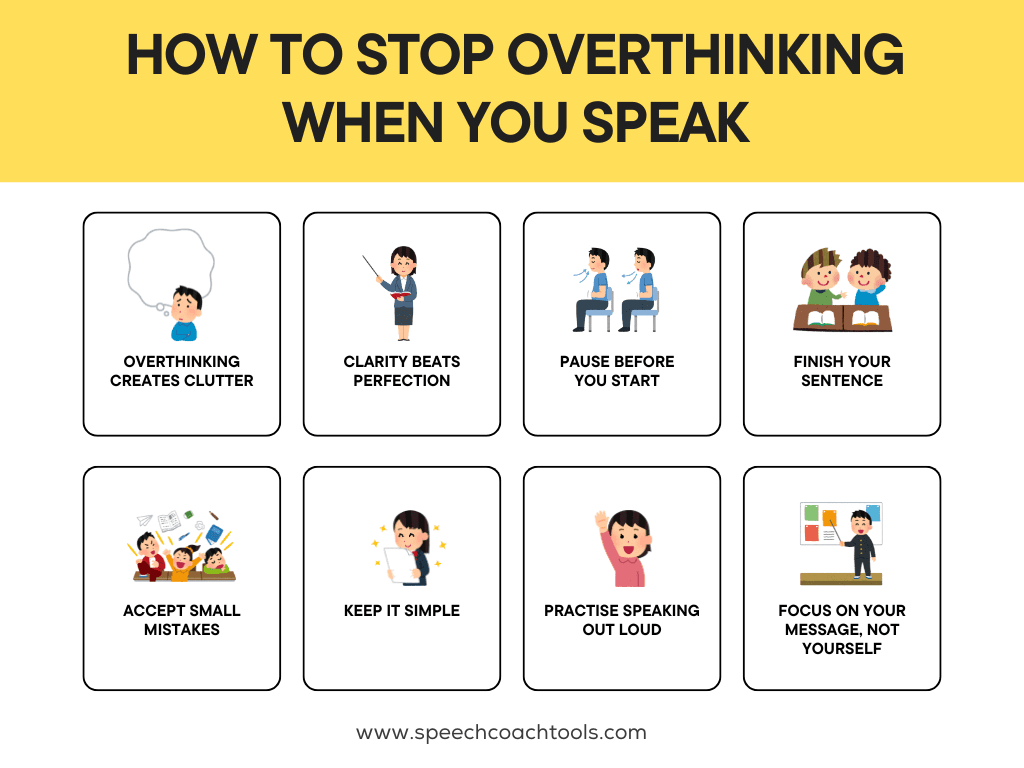
When you overthink while speaking, your brain is trying to do too many things at once. You are thinking about what to say, how it sounds, whether it is correct, and how the other person is reacting. This creates hesitation, filler words, and broken sentences.
Clear speaking is not about perfect wording. It is about getting your message across in a simple and natural way. Most confident speakers are not carefully choosing every word. They are allowing their thoughts to flow and adjusting as they go.
One of the simplest ways to reduce overthinking is to slow down slightly before you start speaking. Take a small pause, then begin your sentence. This gives your brain a moment to organise your thoughts so you do not have to figure everything out mid sentence.
Another helpful habit is to focus on finishing your sentence instead of making it perfect. Many people stop halfway, restart, or change direction because they are trying to improve what they are saying in real time. Finishing your thought, even if it is not perfect, builds better flow and confidence.
It also helps to accept that small mistakes are normal. In everyday conversation, people do not expect perfect grammar or perfectly structured sentences. Trying to sound perfect often makes your speech feel less natural, not more.
If you notice yourself getting stuck, simplify what you are trying to say. Instead of searching for the best way to phrase something, say it in the easiest way possible. Simple language is usually clearer and more effective.
Practising speaking out loud can make a big difference. When you get used to hearing your own voice and expressing your thoughts regularly, your brain becomes more comfortable with speaking without over analysing every word.
Over time, the goal is to shift from thinking about how you sound to focusing on what you want to say. When your attention moves to your message instead of your performance, your speaking becomes more natural, steady, and confident.